
DEHYDRATED FOOD
One of the blessings of rural life is the fact that in many areas there are orchards or agricultural fields, where produce lies on the ground, un-wanted, even after the harvest.
Undersized or miss-colored fruit may be found on or under trees after the picking has been done.
In some areas, supermarkets put old fruit and vegetables for gleaners or food-banks to pick up. This is often at the discretion of the managers of the markets and sometimes they have agreements with particular people regarding the out-dated produce. If you are fortunate enough to live where the markets turn a blind eye on people recovering the “waste” food, you will have a joyous selection of food, free for the taking.
This means a ready source of ; apricots, peaches, nectarines, plums, apples, oranges, grapefruits, persimmons, almonds, walnuts, pomegranates, kiwi fruit and many more.
With the exception of citrus almost all fruit may be used for fruit “roll-ups” or fruit “leather,” when properly prepared and dried.
A couple of advantages of the dried and sheeted fruit are;
1) You can use over-ripe fruit just short of rotting. Just trim off the brown or mold.
2) You can safely eat a dried fruit roll-up while driving with no worry of juice spills
on your clothing or having pits or seeds to dispose of when you are done.
The sweetness of most dried fruits equal that of the moist natural fruits, though the texture may lead one to think otherwise.
If the fruit is dried at a low-enough temperature, the natural enzymes and vitamins remain largely in tact. This differs from canned fruit or fruit in jars, which must have been treated with high temperatures, often destroying many of the vital nutrients and enzymes, which are the most healthful aspects of the fruit.
Of course the fiber remains and is part of the canine-joy of gnawing and tearing at the sumptuous, flat tortilla-like dried fruit portions.
While it is always better to deal up-front with markets, sometimes they do not want to know what is going on with the past-dated food. If they know, in theory they have liability in case someone gets the “two-step” or has to “drive the porcelain bus.”
While food-borne illness is scary, for the most part there is little to fear on produce if it is well washed prior to dehydration. The authors’ personal opinion is that a tummy-growl or loose sit-down are worth the discomfort because to a certain degree they arm the body with defense mechanisms (antibodies or immunities) from having fought the gastro-intestinal battles and won.
This “recycling” of commercial produce is not for the faint at heart or those with compromised immune systems (the very old, the very young and those who have chronic illnesses such as H.I.V. or other maladies.) Otherwise, with a little surveillance and pleasant conversations with neighbors, you may have a bonanza of tasty desserts stored away for a rainy day or in case of a time of disturbance. One never knows.
by Peter Hymans
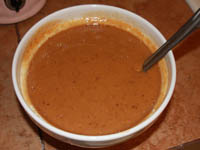 1.Prepare fruit by cutting out bruises seeds and unwanted skins. Cut into manageable chunks and blend using a food processor into a slurry about the consistency of applesauce. Suitable fruits included apples, pears, berries, peaches, bananas just about anything except citrus although a little citrus juice is helpful for discoloration. I just use what i have available. I often freeze fruits that are just past their prime and thaw when i have enough to justify a batch.
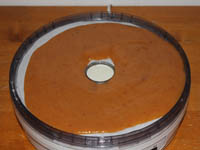 2.Spread slurry on dehydrator sheet or parchment paper. I use a dehydrator i bought at the goodwill for $5 but you can also use you oven on low heat or even a fan setup found on the internet. The slurry should be about 1/4” to 3/8” thick. I have found that you want to make it thicker around the edges as it tends to dry quicker and to make all layers the same thickness so they are done about the same time. rotate layers during drying so that they will be evenly dried.
 3. Fruit leather is done when their is no longer any tacky spots. Time depends on thicknesss, meathod and weather conditions anyware from 2-6 hrs. When done place on selephane cut into serving sizes and roll. Can be stored in a zip lock for a few weeks or you can vacuum seal and freeze for several months possably a year.